
Where AI Works in the Dealership – and Where It Doesn't | Live from ASOTU Con 2026
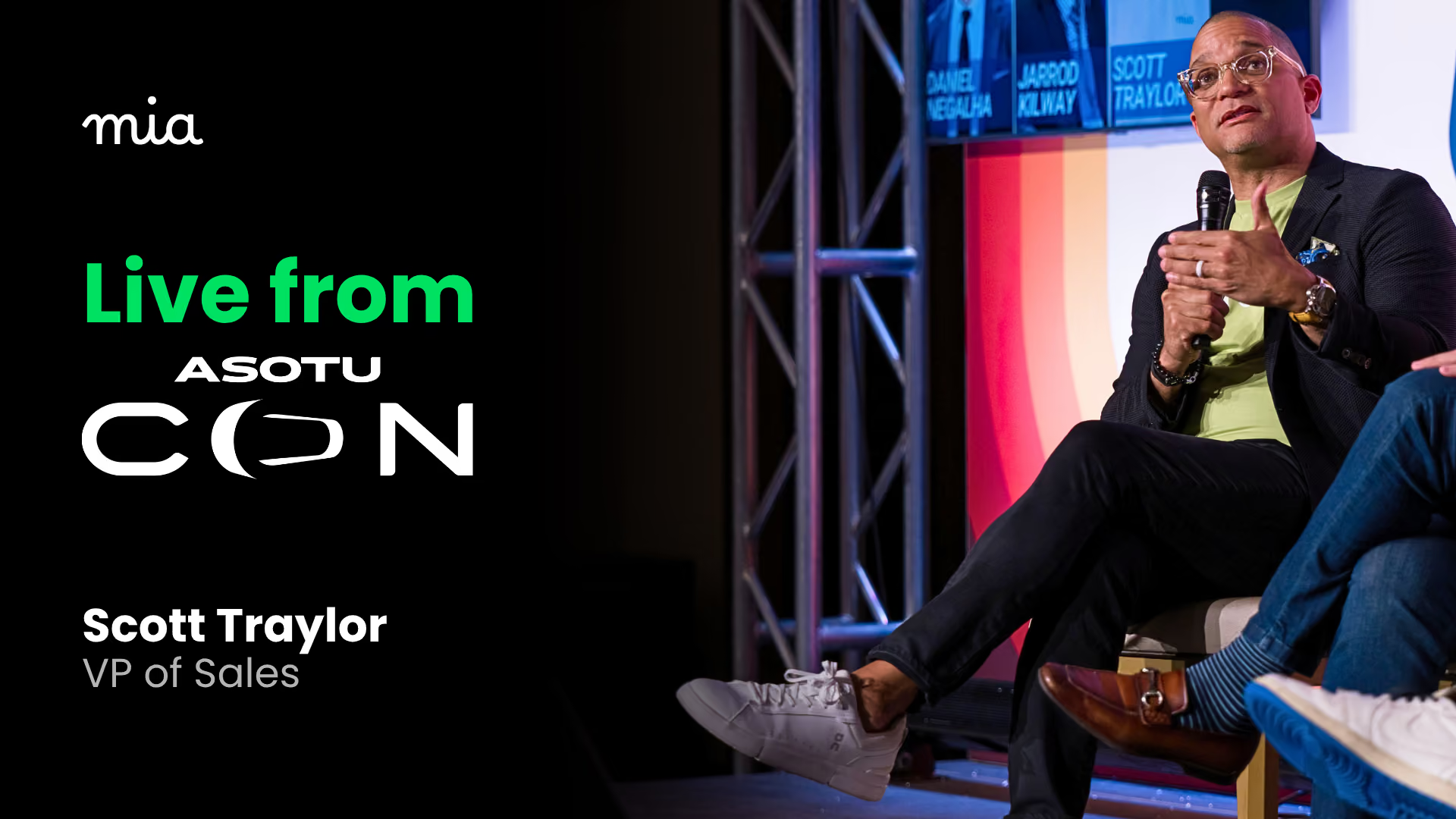
At ASOTU Con 2026, Scott Traylor, VP of Sales at Mia, joined a panel of industry veterans to tackle a critical question in dealerships: what should AI really handle in a dealership, and what should stay in human hands.
Scott spent more than 20 years managing dealerships before joining Mia. He doesn't talk about AI as a technology trend. He talks about it the way a dealer talks about staffing or process: what's broken, what fixes it, and what the numbers say.
The 10-step rule
Scott put it plainly: if there are 10 steps to a sale, AI belongs in steps 1 and 2, and steps 9 and 10. The middle, where rapport gets built, credibility gets established, and the deal closes, that's where you need a person in the room.
"AI doesn't have the ability to have the empathy that we need to create rapport, respect, credibility, and the process of a sale," he said. "That center part, that's that reputation building, that human contact."
The point isn't to automate the relationship. It's to free up the people building it.
The coverage problem nobody talks about
30% of the time, when a customer is actively trying to spend money at a dealership, they don't reach a staff member on the first attempt. That's a coverage problem, and it's costing real money.
Scott pointed to after-hours as the clearest example. Every single day of his dealership career, he walked in to leads from the night before; these were customers who called at 2 AM to book a service appointment, got no answer, and spent the next few days playing phone tag.
A significant chunk of the country works night shifts: doctors, first responders, military, fulfillment center workers. They need access to their dealership on their schedule.
AI for sales vs. service calls
Scott draws a clear line between how AI should work in service versus sales.
On the service side, he's straightforward about it: let AI handle the first ring, every time. Route calls, book appointments, triage issues, escalate where needed. The volume is high, the tasks are largely routine, and the payoff (service advisors freed up to actually advise) shows up fast.
On the sales side, his preference is human first. If someone is calling to buy a car, a salesperson should get that call. But when the salesperson is tied up, the customer still deserves a response. The reason the split matters: a service customer calling to book an oil change has a very different need than a sales customer who's already been to two other stores and is ready to negotiate. One needs information. The other needs a person.
How to evaluate dealership AI tools
Scott closed with three tests he gives every dealer before they commit to a platform.
The monologue test: Talk at the AI without stopping. Does it cut you off before you're done? A system that interrupts mid-sentence will frustrate customers within days.
The interruption test: Now cut the AI off. Does it recover cleanly, or does it lose the thread?
The lift question: Ask the vendor what your day-to-day looks like after you go live. How much ongoing work is on you? That answer tells you more about the partnership than any demo.
"If you deploy the wrong AI, your life is going to get really rough," Scott said. "But if you deploy the right one, it should get easier."
Watch the full ASOTU Con panel above to get the whole story.