
How AI is Driving Dealerships into the Future | Live at DMSC 2026
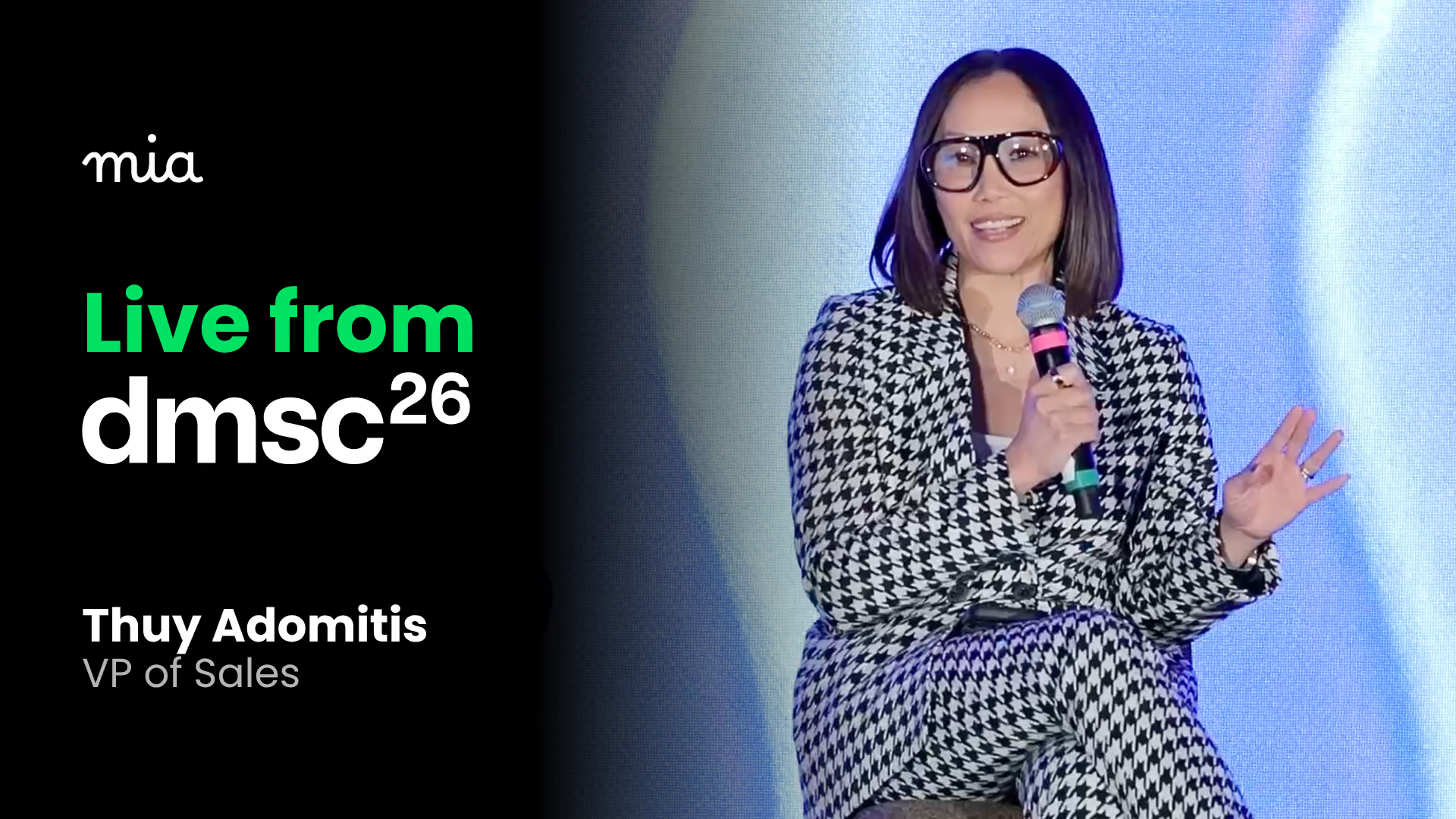
The conversation around AI adoption in car dealerships has quickly shifted from “Should we?” to “Where will we see the most impact” and “How fast can we deploy?” At DMSC 2026, Thuy Adomitis, VP of Sales at Mia, joined a panel of industry leaders at the 2026 Digital Marketing Strategies Conference to talk through exactly that.
Thuy brings 25 years in the car business, including time spent on the lot selling cars herself. That ground-level perspective shapes the way she talks about AI adoption: not as a technology trend, but as an operational fix for problems dealers have lived with for years. Here’s what she shared.
Why are dealerships still missing so many phone calls?
Dealerships miss calls because inbound volume routinely outpaces BDC capacity, and the traditional fix of hiring more agents hits a cost ceiling fast.
The inbound phone line is a weak spot: Calls get missed. Agents are stretched thin. No one is covering the late-night or early-morning calls. The traditional answer has been to hire more BDC staff, but headcount has a ceiling, and cost follows it up.
One of our large dealer groups came to Mia with exactly this challenge. As one of the most sophisticated dealer groups in the country, they were already investing heavily in their BDC operation. The issue was that the volume of inbound calls was outpacing the number of agents they could reasonably staff and pay.
Mia was deployed as a digital voice assistant at their BDC centers to handle the call volume their live agents couldn't absorb. The results speak for themselves:
- 140,000+ calls and conversations handled by Mia
- 44,000+ service appointments booked and pushed directly into their system
- $14 Million in revenue generated from appointments booked by Mia.
Each of those 44,000 appointments represents a customer interaction that would have otherwise pulled a live agent off the floor or gone unanswered entirely. As Thuy puts it, "We shouldn't be putting our live agents on the phone to tell a customer they're open from seven to three. They should be problem-solving and building relationships."
That reframe is important: Implementing AI in your dealership is not about replacing people. Implementing AI is like implementing any other tool: It allows your team members to do their best work more efficiently.
The After-Hours Blind Spot
When Brian Pasch asked Thuy about dealership blind spots, her answer was specific: after-hours calls.
The outdated assumption dealers operate under is that if a customer calls after the store closes, they will leave a voicemail, and someone will follow up the next morning. It sounds reasonable, but in today’s “right now” economy, it’s a significant leak.
Nurses finishing a night shift, police officers heading off-duty, doctors between rotations – these are real customers calling at 10pm, ready to book a service appointment. Without 24/7 coverage, these customers are being sent to voicemail.
For the dealer group mentioned above, Mia was able to capture what was previously slipping:
- 2,000+ appointments booked after hours
- $600,000+ in revenue generated from after-hours bookings
The only thing that changed was having something ready to answer. "Having a voice assistant to pick up those calls and take those appointments and answer those questions now turns you into a 24-hour operation," said Thuy.
Can AI Handle Dealership Sales Calls?
Short answer: Yes.
There is a version of this conversation where dealers are comfortable deploying AI for service bookings, but are far more hesitant to let it touch sales. That hesitation is understandable. Sales calls feel higher-stakes, more nuanced, and harder to script.
Brian Pasch put the question directly: are we there yet?
Thuy’s answer: Yes. Dealers are running her alongside their sales teams, and the setup is straightforward. Mia works the phones in parallel with your people. On a packed Saturday when every salesperson has a customer at their desk, Mia picks up the line that would have rung out. And she is not just taking messages. Mia can check live inventory, compare vehicles, and answer specific product questions on the spot. The customer wanting to know about the trunk capacity of a Camry? Mia’s got it covered.
The result is a sales floor that is always covered, even when it is not
The Bigger Picture: AI as Operational Infrastructure
What Thuy described at DMSC 2026 is a picture of what AI looks like when it is deployed as operational infrastructure rather than a tech experiment.
For dealers still evaluating whether AI has a real place in their operation, the numbers from a single deployment answer that question. The opportunity is not in the future. It is in the calls coming in tonight.
As Thuy says, "It's the 'now' economy. They called you and they want service. There are solutions to pick up where your customer is at."
More Questions from the Floor
Can AI handle dealership sales calls, or just service?
Both. Mia handles service and sales calls. On the sales side, she can check live inventory, compare vehicles, answer product questions, and book appointments, working in parallel with your sales team.
Why do dealerships miss after-hours calls, and how does AI fix it?
Most dealerships route after-hours calls to voicemail, with no guarantee of a same-day callback. AI voice assistants like Mia answer those calls in real time, book appointments on the spot, and push them into the dealership's system, turning missed opportunities into revenue opportunities.
Does using AI for phone calls mean replacing dealership staff?
No. AI handles high-volume, transactional calls so that live agents and salespeople can focus on relationship-building.