
Voice AI Latency Explained: What Dealerships Need to Know
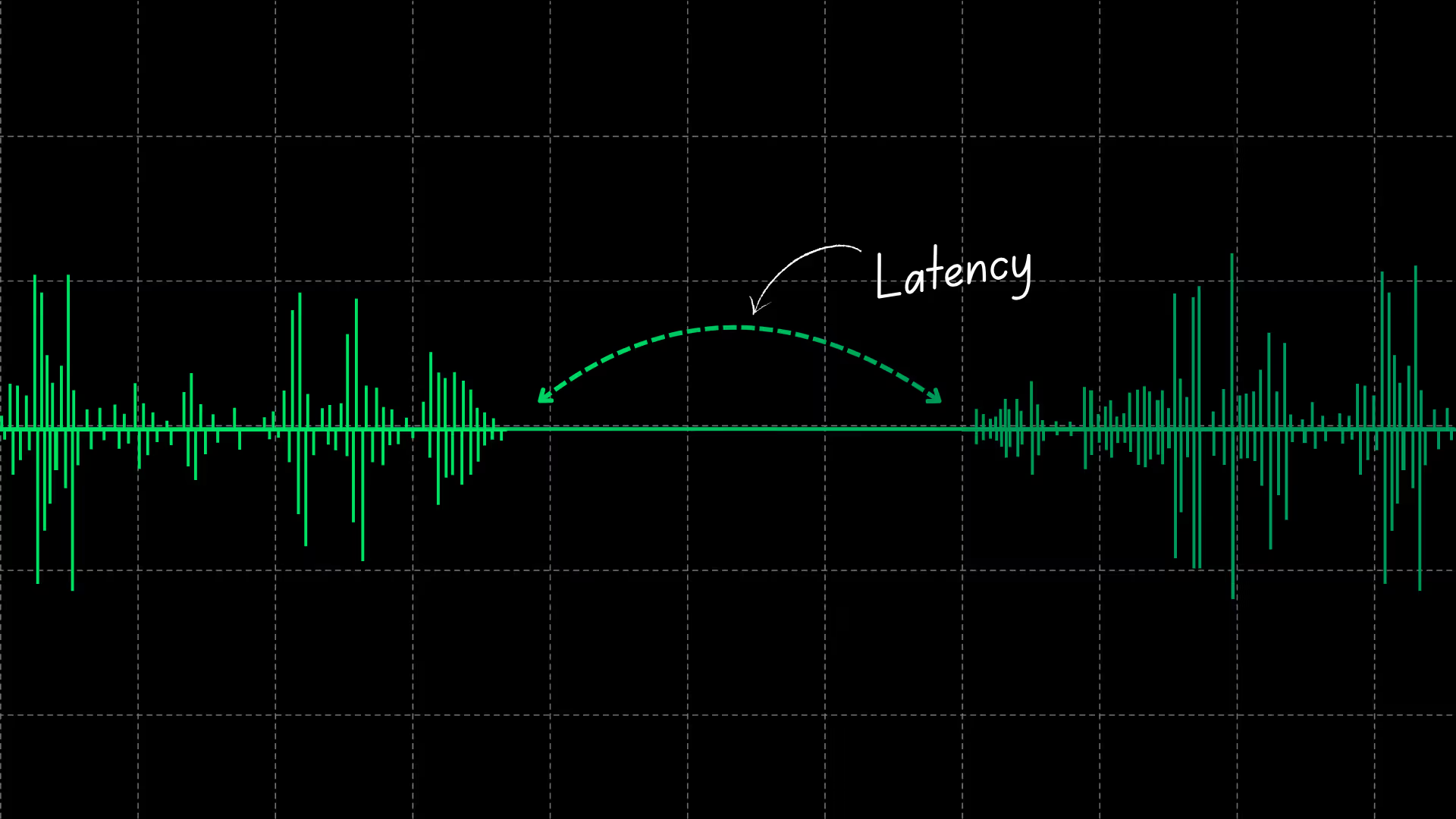
Imagine one of your customers calling your dealership to book a service appointment.
They explain what they need. Then there’s a pause.
Not a normal pause that’s expected from a person thinking for a moment. This one is longer. The customer starts wondering if the system heard them. Did the call drop? Should they repeat themselves?
Then the voice responds.
That awkward gap is latency, and in dealership AI it matters more than most people realize. Dealerships evaluating automotive AI solutions often focus on capabilities:
- Can it answer questions?
- Can it schedule appointments?
- Can it handle service calls?
Those things matter. But the experience of the conversation matters just as much. Because when latency is high – a.k.a. a long pause before responding – conversations feel robotic, slow, and frustrating. When latency is low, the interaction feels smooth, natural, and human.
In a dealership environment specifically, where speed, trust, and customer experience directly impact appointments and CSI, that difference can determine whether AI improves performance or quietly hurts it.
What is latency in voice AI?
In simple terms, latency is the time between when a customer finishes speaking and when the AI responds.
That brief moment includes several things happening behind the scenes, like:
- Speech recognition – converting the caller’s voice into text
- Understanding intent – determining what the caller actually needs
- Generating a response – deciding what to say back
- Text-to-speech – turning that response into a natural voice
All of this happens in fractions of a second. But in conversation, timing is everything. Even small delays can feel surprisingly long.
In natural human conversation, people typically respond within about 200 milliseconds to one second. When a response takes longer than that, it starts to feel unnatural. And when latency creeps into the two-second range or higher, it can feel like something is broken.
Why latency matters even more in a dealership
Not every business relies on phone conversations the way dealerships do. From service scheduling, to sales inquiries, parts questions, appointment confirmations, and more, the phone is still one of the most important communication channels in automotive retail. That means the quality of the conversation matters.
Latency directly affects three things dealerships care about most.
Conversation quality impacts customer trust
Humans are incredibly sensitive to conversational timing. Faster responses make conversations feel like they “click,” creating a sense of connection. Slower responses introduce friction and with it, uncertainty.
When responses are quick and natural, customers settle into the interaction because it feels normal. But when responses lag, callers start to question what’s happening. Even if the answers are correct, the experience feels off. And once confidence drops, customers ask for a human – or hang up entirely.
For AI in the dealership, trust isn’t built on accuracy alone. It’s built on how natural the conversation feels.
Speed directly impacts conversions
Most callers want to accomplish something quickly. Service customers want to book an appointment, confirm availability, or ask about maintenance or repairs; sales customers want inventory information or to schedule a test drive.
When the conversation moves quickly, customers stay engaged and complete the action. But high latency creates friction. Every extra pause slows the interaction and reduces the likelihood that the customer finishes the process.
In practical terms, that means:
- Fewer booked service appointments
- More abandoned calls
- Lower conversion from inbound sales inquiries
The goal of automotive AI isn’t just answering the phone. It’s helping dealerships capture more opportunities that would otherwise be missed. Low latency plays a major role in making that happen.
BDC and call flow efficiency
One of the biggest promises of dealership AI is reducing the load on BDC teams and service advisors. If latency is high, the opposite can happen.
If AI responses feel slow or unnatural, customers often request a transfer to a human representative, which creates additional work instead of removing it.
High latency can lead to:
- More unnecessary call transfers
- Increased interruptions for advisors
- BDC teams handling calls the AI could have completed
When latency is low and conversations feel natural, customers are far more likely to stay within the automated flow without needing staff intervention.
That’s when AI really delivers on the promise of operational efficiency.
What dealers should ask when evaluating voice AI
Latency is one of the most important factors to evaluate when comparing automotive AI solutions, and it’s something every dealership should ask about directly.
Here are a few practical questions worth asking:
- What is your average response latency? Ask for real numbers, not general descriptions.
- How does your system handle interruptions? Customers often talk over automated systems. Strong voice AI should handle that with ease.
- Does performance degrade during high call volume? Some systems slow down when multiple calls happen simultaneously.
- Can I try it right now? The best way to evaluate voice AI is by experiencing a real conversation for yourself.
Hear the difference
When it comes to voice AI, performance is something you can hear. Notice how quickly Mia responds and how smoothly the interaction flows in the call below.
Low latency is what allows dealership AI to move beyond basic automation and become a true extension of the dealership team.
If you’re evaluating automotive AI for your dealership, focus on more than just accuracy. The real impact comes from how quickly and naturally the AI responds, because that’s what builds customer trust, keeps conversations moving, and prevents drop-off.
Book a demo to hear how low-latency AI drives better conversations, higher engagement, and more efficient operations.